Pauci-constraint CD63+ exosomes emptied and refilled with your cargo.
A carrier you can trust is a carrier you have measured — yours, with your cargo inside. Small molecule, protein, nucleic acid or larger constructs: the variety of cargo we can load is the point.
A carrier that does not come from a donor.
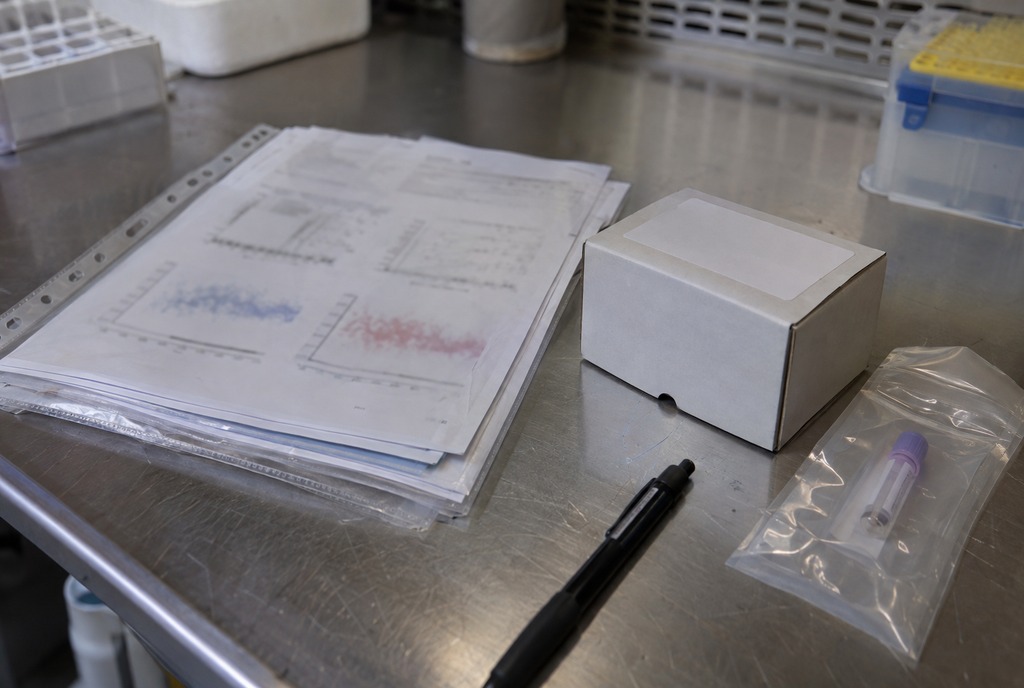
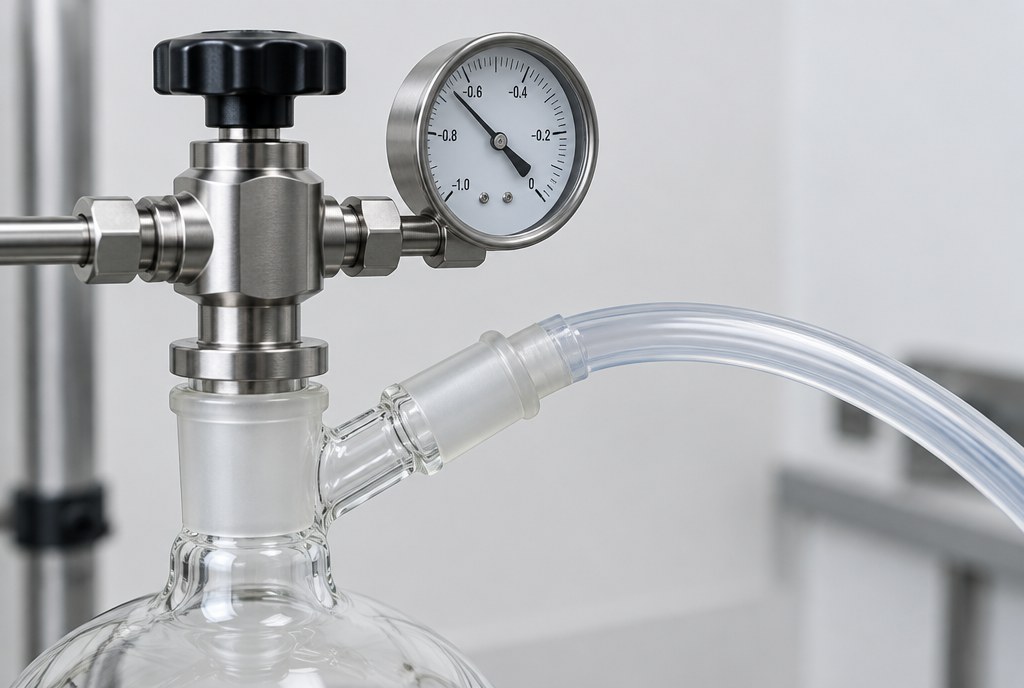
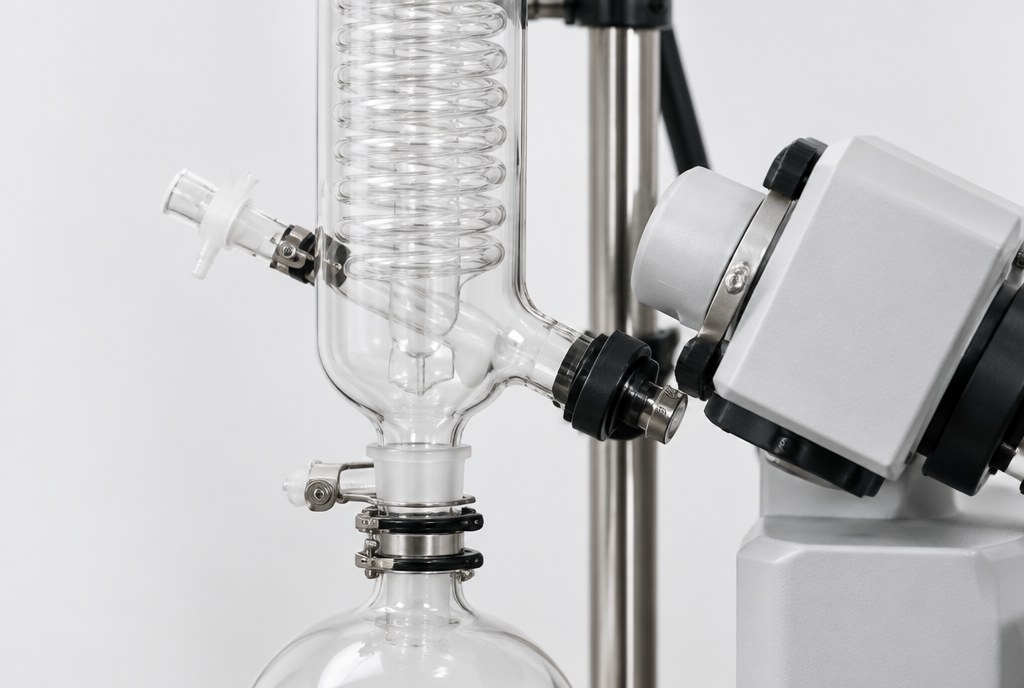
No human donor, no MSC line, and a shorter adventitious-agent file. The input arrives in a kraft case; the carrier is emptied of its native content and refilled with your cargo in 1 room, under vacuum, by an operator in full PPE.
What we claim is what we can show you on your own cargo. The study returns loading efficiency, integrity of the loaded cargo, concentration and size distribution, the CD63+ signature read before emptying and after refilling, and the assay readout you specify.
Pauci-cost, pauci-side effects, pauci-constraints.
Pauci-cost
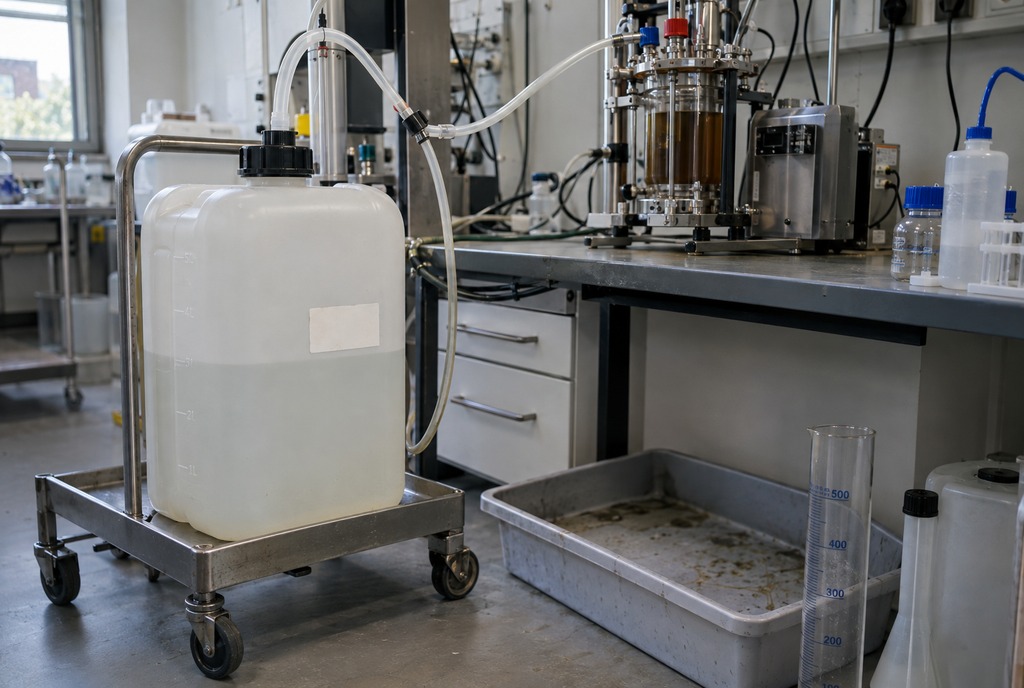
A carrier from a controlled, single-source input, produced in litre-scale batches. No donor, no cell line, no costly culture to maintain.
Pauci-side effects
A vesicle that confines its cargo aims at fewer off-target effects and lower doses — measured on your cargo before any claim.
Pauci-constraints
No human donor, no MSC line, a shorter adventitious-agent file. The same work, with less. Idem paucis.
Your cargo, our CD63+ exosomes, your data.
A feasibility study, scoped in writing, with a data package you own. The poster opens after a verified work email.
Empty and refill.
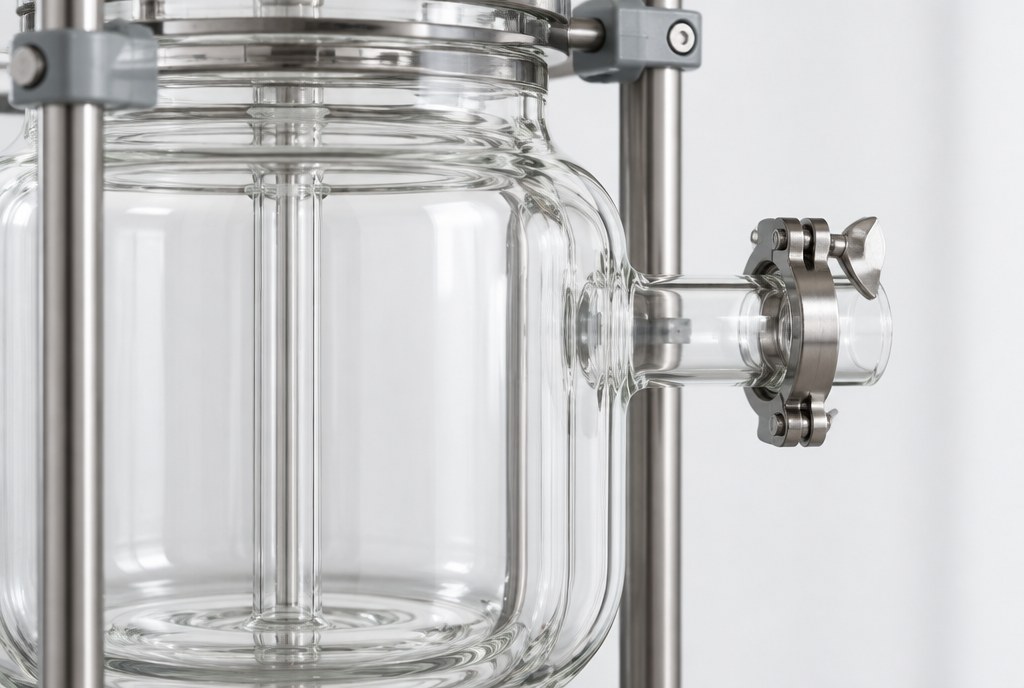
A proprietary process empties CD63+ exosomes of their native content and refills them with your cargo. The CD63+ signature is read before emptying and after refilling; the payload is yours. The carrier is offered non-exclusively, as a second source: your cargo and your indication stay yours.
- Step 1
Source
CD63+ exosomes are isolated from a controlled, single-source input by sequential centrifugation. No donor, no cell line, no animal component in the carrier.
- Step 2
Unload
The native content of the vesicle is removed while the membrane — and its CD63+ signature — stays intact. Patent pending.
- Step 3
Reload
Your cargo is loaded: small molecule, protein or nucleic acid. Loading is measured, not assumed.
- Step 4
Read
The CD63+ signature is read before the cycle and after. Cargo confinement, concentration, size distribution and integrity come back to you as a data package.
Your cargo, our CD63+ exosomes, your data.
A feasibility study, scoped in writing, with a data package you own. The poster opens after a verified work email.
Send the cargo. Get the data.
An experiment, not a commitment: your cargo, our CD63+ exosomes, your readout. Science first, scoped in writing, easy to start.
What you send
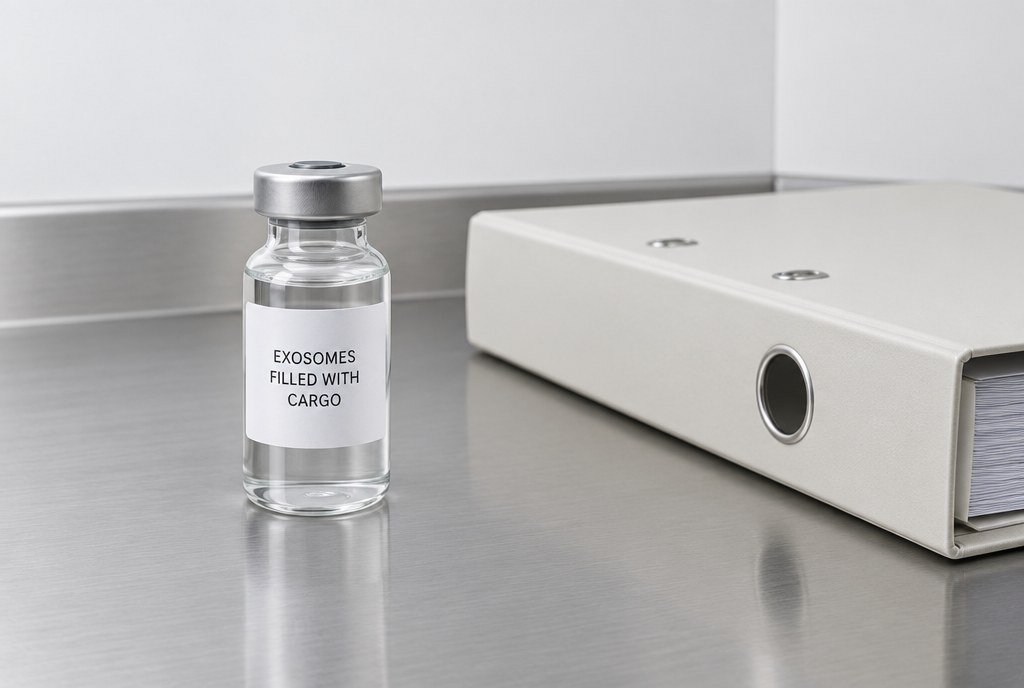
Your cargo in the form you hold it, its identity and purity data, the assay you want run, and the acceptance threshold you would apply to any other carrier.
What we do
Empty CD63+ exosomes and refill them with your cargo, at 2 loading conditions unless you specify more, then characterise the refilled product.
What you get back
A data package: loading efficiency, cargo integrity after loading, particle concentration and size distribution, the CD63+ signature read before emptying and after refilling, your functional readout, and a retained sample of the refilled lot.
What it costs
A fixed price per cargo class, quoted on the brief. No licence, no option, no kit to buy first.
What happens next
If the data holds, a scale-up and gap-closure scope is written with you — in vivo work, toxicology and GMP manufacture are scoped there, against what the study showed. If it does not, you own a documented answer that lets the programme redirect early, before the expensive work.
Small molecule
Hydrophilic or lipophilic. Loading measured by your reference method.
Protein
Enzymes, antibodies and fragments. Activity checked after loading.
Nucleic acid
siRNA, mRNA and ASO. Integrity checked after loading.
Large molecules
Loading has been achieved with larger molecules like gDNA. Characterised like every other class.
Your cargo, our CD63+ exosomes, your data.
A feasibility study, scoped in writing, with a data package you own. The poster opens after a verified work email.
One carrier. Four areas where the carrier is the open question.
Where the payload is decided and the vehicle is not, the carrier becomes the question — that is where we work.
Oncology
Open for studiesPAUCIS joins forces with a French public research centre in radiobiology, taking the platform into oncology. Small molecule and nucleic acid cargo in tumour models; the study returns loading and a cytotoxicity or expression readout on the cell line you name.
Neuroscience
In developmentAn intranasal nose-to-brain formulation is being developed for CNS delivery. Feasibility studies on CNS cargo run on the standard route while that formulation matures.
Vaccines and immunomodulation
Open for studiesProtein and RNA cargo characterised in the immunogenicity assay you specify. We do not claim an immunological property of the carrier until it is measured.
Rare disease and gene therapy
Open for studiesA non-exclusive second source for programmes where the scale-up quote on the current vehicle has arrived. Translational partners welcome.
Your cargo, our CD63+ exosomes, your data.
A feasibility study, scoped in writing, with a data package you own. The poster opens after a verified work email.
What we can state with confidence.
Measured on our own lots, with method, lot and date — and nothing beyond.
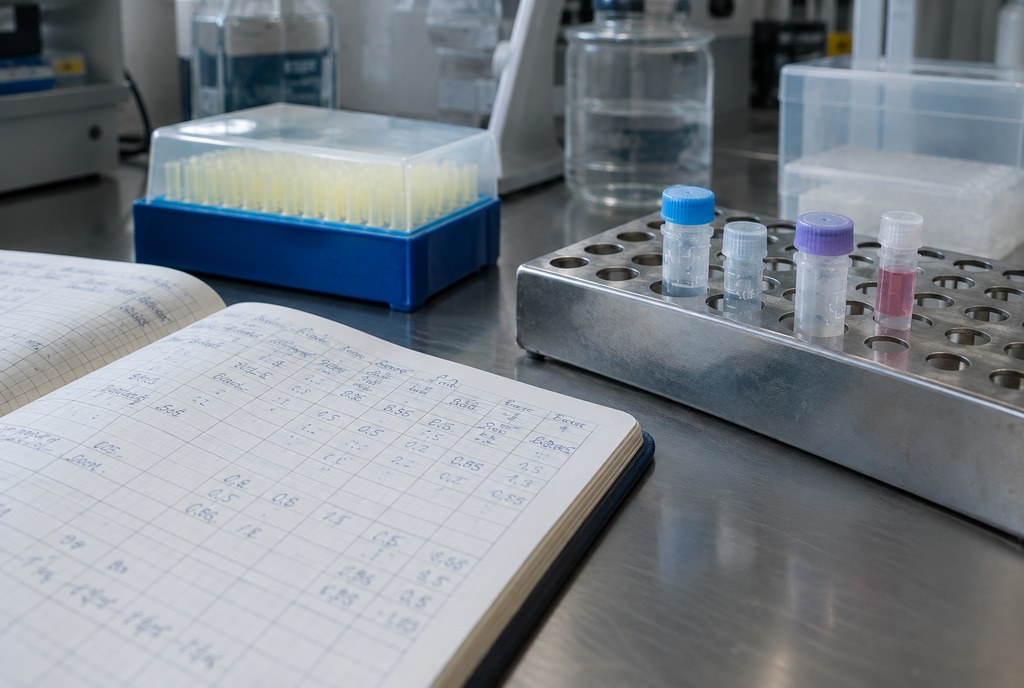
- Native preparation, litre-scale batches: a clear CD63-like signal by tetraspanin sandwich ELISA, concentration extrapolated from a human EV standard.
- After the proprietary unload / reload cycle (vitamin C model cargo): the signal drops, with 2 of 3 replicates still above the detection limit, p < 0.001 versus native.
- The reduction across the cycle is an open engineering question, named here before you ask.
- EV-loaded vitamin C showed the same fibroblast viability profile as the free cargo control (MTT, 24 h).
- Cell-free assay: the free peptide fraction is active on CDK5/p25, the EV-loaded fraction is not — the cargo stays confined inside intact vesicles.
- n = 3 technical replicates per condition.
- The CD63+ signature survives our unload / reload cycle, and it is read before and after, on every lot.
- Loaded cargo stays confined inside intact vesicles in the cell-free assay.
- Loading has been achieved on a small molecule and on larger molecules like gDNA.
- Every study returns a retained sample of the refilled lot — run your own assay on it.
Your cargo, our CD63+ exosomes, your data.
A feasibility study, scoped in writing, with a data package you own. The poster opens after a verified work email.
Frugal, stubborn, and fond of proof.
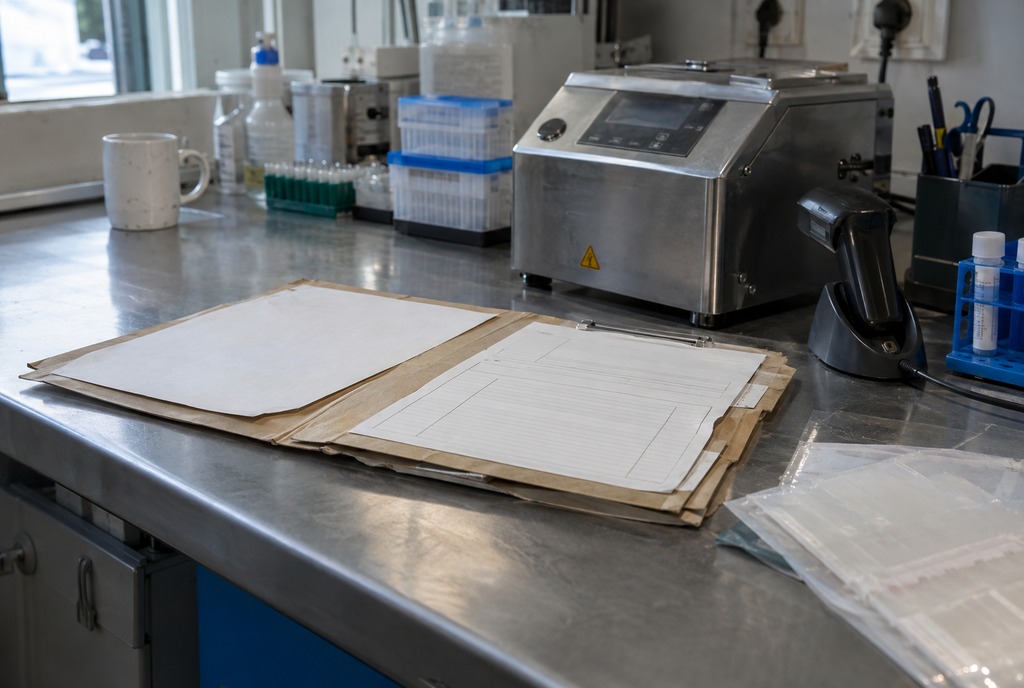
We come from a lab bench where a CD63+ exosome did the same job with far less. We kept the bench habits: measure first, claim second, and do the same thing with less.
The name. PAUCIS, Latin for with few. The line under it, idem paucis: the same with less.
What a better carrier could change. A vesicle that confines its cargo and keeps its targeting signature could mean fewer off-target effects, lower doses, and a lower cost per dose.
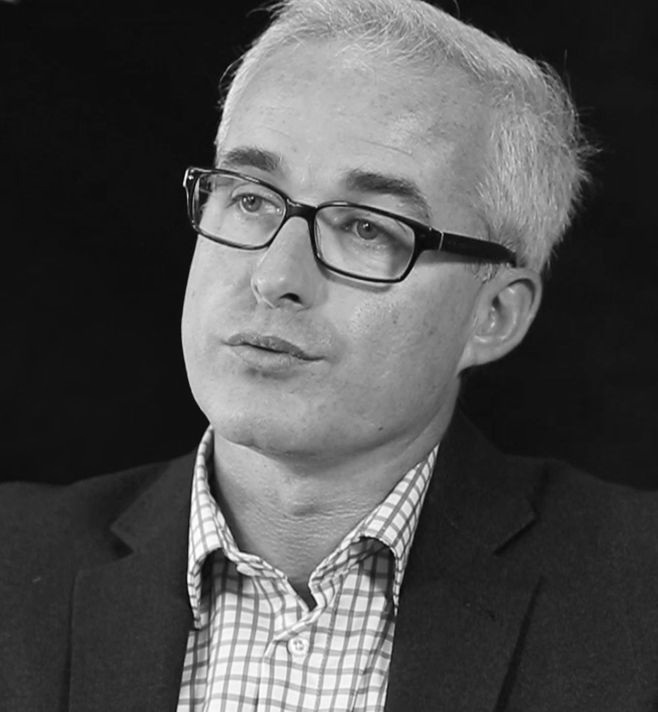
Vincent Bourgeteau
Scientific lead
Tropical biology. Institut Pasteur, IRD. Over 15 patents. Platform and process.
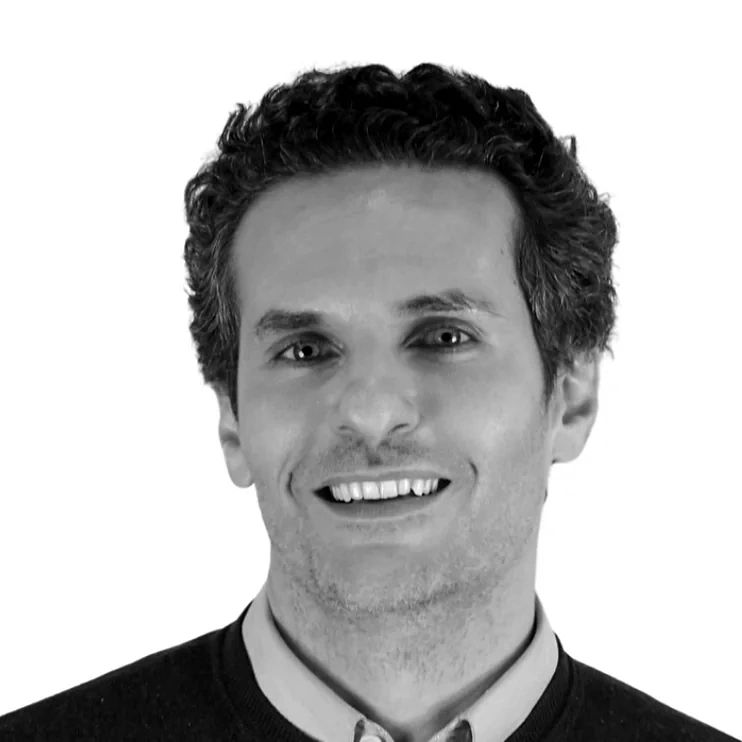
Guillaume Bakouch
Business development
Founder of CARE BD, 2007. HEC Paris. Partnerships and studies, Paris.
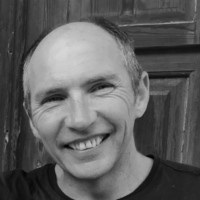
Louis-François Omnes
Quality and regulatory
Founder of LFO Health. Dossiers before HAS and CNEDIMTS. Quality system and regulatory route.
Your cargo, our CD63+ exosomes, your data.
A feasibility study, scoped in writing, with a data package you own. The poster opens after a verified work email.
Notes from the bench.
- 2026 · 22 to 24 Sept
PAUCIS at the 8th Exosome-Based Therapeutic Development Summit
Boston. We take part as visitors on the 3 days.
- 2026 · 6 to 8 Oct
PAUCIS presents at the FSEV meeting 2026
Paris. We present the platform and the feasibility route on the 3 days.
- 2026 · Sept
PAUCIS joins forces with a French public research centre in radiobiology
The collaboration takes the platform into oncology.
- 2026 · Sept
PAUCIS
The platform is now PAUCIS, idem paucis: the same with less.
Your cargo, our CD63+ exosomes, your data.
A feasibility study, scoped in writing, with a data package you own. The poster opens after a verified work email.
Request access to the scientific poster.
Plant-derived CD63-positive extracellular vesicles retain their tetraspanin signal after an unload / reload cycle and functionally confine their cargo: analytical and functional evidence from 5 to 10 L batches. Bourgeteau, Omnes, Bakouch.
Leave your professional email in the access form. The request goes to our business development team for review; the poster link is sent after approval.
Poster access is handled through a short Fillout form. It sends the request to PAUCIS and does not expose the PDF on this site.
Need help? Email contact@paucis.bio.
Request a feasibility study.
6 fields. We answer with a scoped study and a price, or with the reason we cannot run it.
Paris, France
General enquiries: contact@paucis.bio